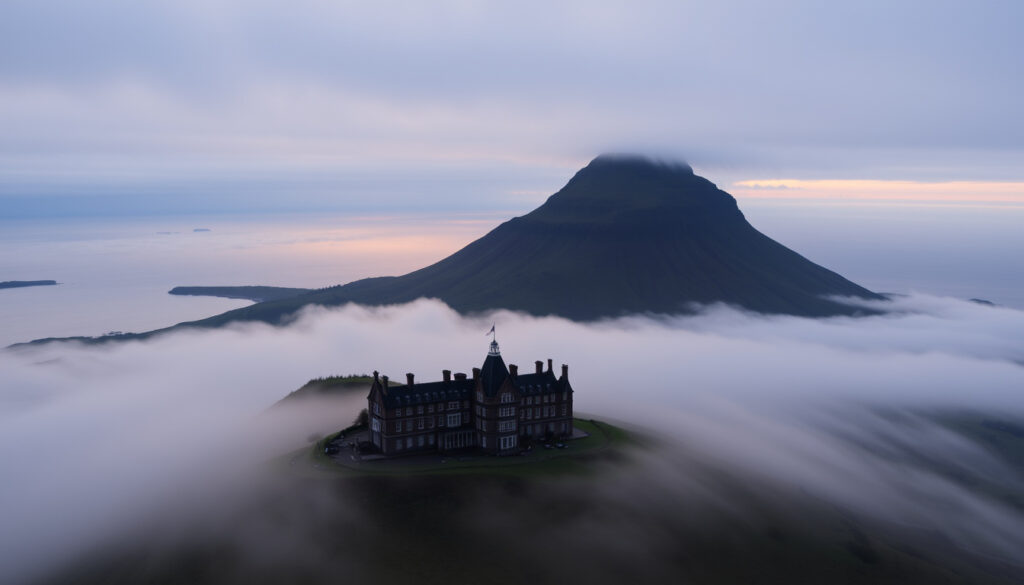
Slieve Donard – Ultimate Guide to Mountain and Hotel
Slieve Donard: The Mountain and the Hotel
Slieve Donard stands as the highest peak in Northern Ireland, a granite summit that draws thousands of walkers each year. But the name also refers to something else entirely: a Victorian-era luxury hotel on the Newcastle seafront, complete with spa treatments and fine dining. The overlap causes confusion, yet both entities are central to the region’s identity.
The mountain rises 850 metres above the Mourne Mountains, a range that inspired songs and stories for generations. Just a short walk from its base, the Slieve Donard Resort & Spa offers a different kind of ascent—one involving seaweed wraps, oak-panelled restaurants, and sea views. Understanding both sides of this name matters for anyone planning a visit to County Down.
Slieve Donard Mountain: Height, Pronunciation & Location
Highest point in Northern Ireland and Ulster. Height 850 m (2,790 ft). Part of the Mourne Mountains.
Most popular route. ~7 miles round trip. Moderate to hard grade. 4–6 hours duration.
4-star luxury resort in Newcastle. Features spa, pool, multiple restaurants. Opened in 1895.
Located in County Down, approx 30 miles south of Belfast. Area of Outstanding Natural Beauty.
Five key points help clarify what Slieve Donard is and where it sits in the landscape of Northern Ireland.
- Dual Identity: The name Slieve Donard represents two distinct, famous entities in Northern Ireland—the tallest mountain and a historic Victorian luxury hotel.
- Accessible High Peak: The mountain offers a challenging but non-technical climb via the Glen River path, making it a popular summit for hikers of varying abilities.
- Historical Tourism Link: The Slieve Donard Hotel was purpose-built in 1895 to accommodate Victorian railway tourists visiting the Mourne Mountains.
- Wellness Destination: Today the hotel is known for its extensive spa facilities, fine dining, and status as a premier wedding venue in Northern Ireland.
- Pronunciation Consistency: The name is uniformly pronounced “Sleeve Don-ard” in English, derived from the Irish “Sliabh Dónairt” (Donard’s Mountain).
| Attribute | Mountain | Hotel |
|---|---|---|
| Type | Highest Peak in Northern Ireland | 4-Star Luxury Hotel & Spa |
| Height / Grade | 850 m (2,790 ft) | N/A (located at sea level in Newcastle) |
| Location | Mourne Mountains, Co Down | Newcastle Seafront, Co Down |
| Feature | Summit panoramic views, Glen River trail | Thermal spa, fine dining, ballroom |
| Established | Geological / Named after St. Donard (c. 500 AD) | Opened in 1895 |
The height of Slieve Donard is listed as 850 metres in most authoritative sources, though some references cite 853 metres. The mountain sits within the Mourne Mountains range near Newcastle, County Down, roughly one hour’s drive south of Belfast. Its pronunciation follows a consistent pattern: Slee-ve Don-ard, with the Irish form /ʃljiːv dɒnərd/ reflecting its Gaelic root.
How to Climb Slieve Donard: Best Routes, Duration & Difficulty
The most widely recommended path to the summit is the Glen River Track, an out-and-back route that begins at Donard Park in Newcastle. The walk covers approximately 9.3 kilometres (5.8 miles) and takes between 4.5 and 5 hours for most walkers. The total ascent ranges from 827 to 853 metres depending on the source consulted.
The start point is the Donard Park Car Park at the southern end of Newcastle, with GPS coordinates 54.205863, -5.894409. Parking is free and generally ample, though spaces fill early on weekends and during peak summer months.
What does the Glen River route involve?
The trail passes through Donard Park and into Donard Wood, a mixed woodland of deciduous trees and pines. It follows the Glen River uphill through old stands of Scots Pine, Oak, and Birch. Walkers cross three bridges along the way and should exercise caution near riverbank overhangs, which can be unstable after rain.
The path eventually reaches the “Saddle,” the col between Slieve Donard and the neighbouring peak Slieve Commedagh. From there, the route follows the Mourne Wall steeply up to the summit. The wall, a dry-stone structure built in the early 20th century to enclose the Belfast water catchment area, serves as a reliable guide to the top.
Is Slieve Donard a hard walk?
The walk is graded as moderate to challenging. The lower section through the woods is gentle, but the final pull along the Mourne Wall is steep and requires a good level of fitness. Underfoot conditions vary: the lower path can be muddy, and the upper slopes are rocky and exposed. Proper hiking boots, waterproof clothing, and layered warmth are strongly recommended.
What is the best time to climb?
The most reliable months are March through October, when daylight hours are longer and weather conditions tend to be more stable. However, the Mourne weather can change rapidly at any time of year, and mist can reduce visibility on the summit. Early starts are advisable, particularly in summer when the car park fills quickly.
The Bloody Bridge route offers a one-way alternative that ends in Newcastle. It covers roughly 9 kilometres and starts from a different point on the mountain’s eastern flank. This route suits those who prefer not to retrace their steps, but it requires arranging transport from the finish point.
Eagle Rocks, the north-side cliffs of Slieve Donard, should be avoided. The approaches are steep and dangerous, and several incidents have been reported there. Walkers are advised to stick to the established Glen River path and the Mourne Wall route.
Slieve Donard Hotel & Spa: Accommodation, Dining & Relaxation
The Slieve Donard Resort & Spa, originally opened as the Slieve Donard Railway Hotel in 1895, is a luxurious Victorian property overlooking the sea. It sits on six acres of private grounds in Newcastle, roughly a 15-minute walk from the mountain’s base. The hotel was designed by architect William Battle and built by the Belfast & County Down Railway to serve the growing tourist trade drawn to the Mournes.
Does the hotel have a spa?
Yes. The spa offers massages, seaweed wraps, and marine facials, all with panoramic views of the beach. The pool facilities include a swimming pool, a hot jacuzzi, a sauna, and a steam room. The spa is a central part of the hotel’s current offering, with packages that combine treatments with overnight stays.
What dining options are available?
The hotel has multiple dining venues. The Oak Tree Restaurant serves fine dining with piano music and views over the grounds. The Percy French, a separate building on the property, offers pub-style food including fish and chips and pork dishes. The Lighthouse Lounge, located in the spa area, provides light meals for guests using the wellness facilities.
Reported main courses include Mourne lamb with new potatoes and a beef rib described as falling off the bone. However, a full public menu is not available from current sources, so specific dish availability may vary by season.
No complete, publicly accessible menu has been published online by the hotel in a structured format. The dishes mentioned here are based on media reports and user reviews rather than an official menu document. Travellers with specific dietary needs should contact the hotel directly before arrival.
The History and Meaning Behind Slieve Donard
The name Slieve Donard comes from the Irish Sliabh Dónairt, meaning “Donard’s Mountain.” The Donard in question is Saint Donard, a follower of Saint Patrick who is said to have lived as a hermit on the mountain around the year 500 AD. The name was formalised on maps during the Ordnance Survey of Ireland in the 1830s.
The mountain holds deep cultural significance in Irish folklore and has been a landmark for centuries. Its position as the highest peak in Ulster made it a natural reference point for travellers, poets, and surveyors alike. The hotel, built later, borrowed the mountain’s name to associate itself with the grandeur of the landscape.
The railway connection played a pivotal role in shaping the modern identity of the area. When the Belfast & County Down Railway extended its line to Newcastle in the late 19th century, the hotel was built to accommodate the influx of visitors. That link between transport, tourism, and the natural environment persists today: the Mourne Mountains remain a major outdoor recreation destination, while the hotel anchors the luxury hospitality sector in the region.
Timeline of Slieve Donard: From Hermit to Hotel
- c. 500 AD: Saint Donard, a follower of St. Patrick, reportedly lives as a hermit on the mountain, giving it his name.
- 1830s: Ordnance Survey of Ireland formalises the name Slieve Donard (Sliabh Dónairt) on maps.
- 1895: Slieve Donard Railway Hotel opens, designed by William Battle and built by the Belfast & County Down Railway.
- 1910s–1930s: Hotel expands and becomes a fashionable seaside destination for tourists and golfers.
- 1970s: Major extensions add the current wing and leisure facilities.
- 2014–2015: Extensive refurbishment; the hotel joins the Marine & Lawn Hotels & Resorts collection.
- 2024/2025: The Glen River walk remains the most promoted route; hotel packages focus on spa breaks and weddings.
Mountain vs. Hotel: What Is Clearly Known and What Remains Unclear
| Established information | Information that remains unclear |
|---|---|
| Height: Slieve Donard is exactly 850 metres (2,789–2,790 ft) tall. | Some sources cite 853 m; the variation may be due to different survey methods. |
| Pronunciation: Universally pronounced /sliːv ˈdɒnərd/ (Sleeve Don-ard). | The exact Irish pronunciation with full Gaelic phonetics is rarely demonstrated in audio format. |
| Status: It is the highest mountain in Northern Ireland and the province of Ulster. | Slieve Donard is the 7th highest peak in Ireland overall (Carrauntoohil in Kerry is the highest). |
| Hotel Location: The Slieve Donard Hotel is on the seafront in Newcastle, not on the mountain itself. | The name overlap causes frequent confusion in search queries and travel planning. |
Context: Slieve Donard in the Mourne Mountains and Irish Tourism
Slieve Donard is the highest peak in the Mourne Mountains, a granite range that forms the backbone of County Down. The mountains are a designated Area of Outstanding Natural Beauty and attract walkers, climbers, and sightseers throughout the year. The Mourne Wall, a 22-mile dry-stone structure that crosses fifteen peaks, is itself a feat of 19th-century engineering and a defining feature of the landscape.
The cultural footprint of the Mournes extends beyond geography. The mountains inspired the song “The Mountains of Mourne” and appear in works by writers including C. S. Lewis, who spent childhood holidays in the area. The railway hotel cemented the region as a tourist destination in the Victorian era, and the modern resort continues that tradition with a focus on wellness and weddings.
Today, Slieve Donard serves two distinct audiences: outdoor enthusiasts seeking a summit challenge and luxury travellers looking for spa breaks and fine dining. Both groups share the same postcode but engage with the landscape in very different ways.
Sources and Key Quotes on Slieve Donard
“Slieve Donard is the highest mountain in Northern Ireland, the highest in Ulster, and the seventh-highest in Ireland, with a height of 850 metres (2,790 ft).”
— Wikipedia
“Slieve Donard at 850m (2,789 ft) is the highest of the Mourne Mtns. The views from the summit are extensive.”
— WalkNI / Discover Northern Ireland
“Nestled at the foot of the Mountains of Mourne, Slieve Donard luxury resort stands among six acres of private grounds in Newcastle.”
— Marine & Lawn Hotels & Resorts
Summary: What You Need to Know About Slieve Donard
Slieve Donard is both the highest mountain in Northern Ireland (850 m) and the name of a historic luxury hotel in Newcastle, County Down. The mountain is best climbed via the Glen River Track, a 5.8-mile route that takes 4 to 5 hours. The hotel offers a spa, multiple dining venues, and wedding facilities. For further reading on coastal activities in the area, see Sea Salts.
Frequently Asked Questions About Slieve Donard
Is Slieve Donard the highest mountain in Ireland?
No. Slieve Donard is the highest mountain in Northern Ireland and Ulster (850m), but the highest peak in all of Ireland is Carrauntoohil in County Kerry (1,038m).
What is the closest city to Slieve Donard?
Belfast is approximately 30 miles north. The nearest town is Newcastle, County Down, which lies at the foot of the mountain.
Are dogs allowed on the Slieve Donard walk?
Yes, dogs are permitted on the Glen River path but should be kept on a leash due to livestock and steep terrain.
What should I pack to climb Slieve Donard?
Sturdy hiking boots, waterproof clothing, layered warmth, plenty of water, snacks, a map or GPS device, and a charged phone.
Can I get married at the Slieve Donard Hotel?
Yes. The hotel is one of Northern Ireland’s most popular wedding venues, featuring several ceremony and reception spaces.
What is the elevation gain of the Slieve Donard walk?
The total ascent is approximately 850 metres (2,790 feet) from the Donard Car Park to the summit.
Is there parking at the Slieve Donard trailhead?
Yes. The main parking is at Donard Car Park in Newcastle. It can fill up early on weekends and during peak summer season.
Does the hotel have a full public menu online?
No complete menu is currently published in a structured format. Dishes such as Mourne lamb and beef rib have been reported, but contact the hotel for current offerings.
What does the name Slieve Donard mean?
It comes from the Irish Sliabh Dónairt, meaning “Donard’s Mountain,” after Saint Donard, a follower of St. Patrick.
Can you stay at the Slieve Donard hotel without climbing the mountain?
Yes. The hotel operates independently as a seaside resort. Many guests visit solely for the spa, dining, and coastal setting.
More related posts
 Billy Fury – Biography, Cause of Death, and Lasting Legacy
 Emily Thornberry – Biography, Family, and Political Career
 Lupita Nyong’o – Biography, Movies and 2025 Update
 Julius Caesar – Life Assassination and Legacy of Rome’s Dictator
 Ariana Greenblatt – Age, Height, Parents, Ahsoka Career
 Frank Lampard – Coventry Manager Career Stats Personal Life
 Joan Cusack – Biography, Net Worth and 2025 Updates
 Eric Idle – Biography, Net Worth, Wife and Tour 2025