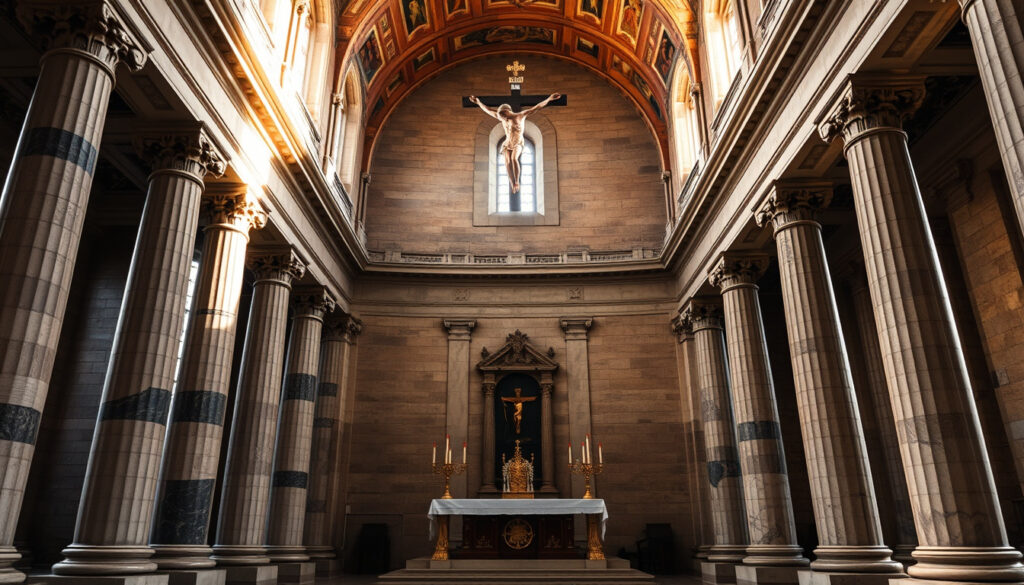
St Peter – Apostle, First Pope, and the Story of His Martyrdom
Saint Peter, originally a fisherman from Bethsaida, became one of the most influential figures in Christianity. Known as the first pope by the Roman Catholic Church, his life from the shores of Galilee to martyrdom in Rome shaped the foundation of the early Christian Church. This article explores his biography, death, patronage, and lasting legacy.
His journey from a simple fisherman to the “rock” upon which the Church was built remains a powerful story of transformation and leadership. Peter’s role in the Gospels and the Acts of the Apostles provides a window into the early days of Christianity.
Who Was St Peter?
| Name | Saint Peter (also known as Simon Peter, Cephas) |
|---|---|
| Born | c. 1 AD, Bethsaida, Galilee (modern Israel) |
| Died | c. 64-68 AD, Rome, Italy (martyred by crucifixion) |
| Known For | One of the Twelve Apostles, first Pope, key figure in early Christianity |
Key Insights
- Peter was originally a fisherman before being called by Jesus to become a “fisher of men.” (Matthew 4:18-20)
- He is regarded as the first Pope by the Catholic Church, based on Jesus’ words in Matthew 16:18-19.
- Peter denied Jesus three times before the crucifixion, but later became a bold leader.
- He was crucified upside down at his own request, feeling unworthy to die in the same manner as Jesus.
Quick Facts
| Full name | Simon bar Jonah, later called Peter (Rock) |
|---|---|
| Occupation | Fisherman, later Apostle and Church leader |
| Birthplace | Bethsaida, on the Sea of Galilee |
| Death place | Rome (tradition) |
| Feast day | June 29 (with Saint Paul); also February 22 (Chair of St. Peter) |
| Patronage | Popes, fishermen, net makers, shipbuilders, the city of Rome |
| Symbols | Keys, upside-down cross, rooster, boat |
Why Was St Peter Crucified?
Peter was martyred in Rome between 64 and 68 AD during the persecution of Christians under Emperor Nero. Nero blamed Christians for the great fire that devastated Rome, leading to widespread arrests and executions. Peter was among those captured.
How Did St Peter Die?
According to tradition, he was sentenced to crucifixion. At his own request, he was crucified upside down because he did not consider himself worthy to die in the same posture as Jesus. This account appears in early Christian writings by Origen and Tertullian, as recorded by Eusebius.
Where Was St Peter Crucified?
Historical sources, including the Catholic Encyclopedia, describe it as an “indisputably established historical fact” that Peter labored in Rome and ended his life there by martyrdom. Vatican Hill in Rome is cited as the location of his death.
Why Was St Peter Crucified Upside Down?
Peter requested this form of execution out of humility. He felt unworthy to die in the same manner as his “Divine Master.” The upside-down crucifixion became a symbol of his humility and is now known as the St Peter’s cross.
The fact that Peter died in Rome by crucifixion is widely accepted by historians. The details of the upside-down crucifixion come from second-century apocryphal texts and are considered moderately certain within Catholic tradition.
What Is the St Peter Cross?
The St Peter cross is an upside-down Latin cross. It is directly associated with the manner of Peter’s crucifixion and has become a symbol of his martyrdom and humility.
What Does the Upside-Down Cross Symbolize?
In Christian iconography, the upside-down cross represents Peter’s request to be crucified inverted. It symbolizes humility and the recognition that he was not worthy to die in the same way as Jesus. It is distinct from the cross of Saint Peter, which is often used in papal imagery.
Is the St Peter Cross Used Today?
The upside-down cross is still used in Christian art, particularly in depictions of Peter. It appears on the papal throne and in the Vatican. However, it has also been adopted by some secular groups as a symbol of rebellion, which can cause confusion.
What Is the Meaning of the St Peter Cross?
For Christians, the St Peter cross remains a reminder of humility and sacrifice. It is one of the key symbols associated with the apostle, along with keys and a rooster.
What Is St Peter the Patron Saint Of?
Peter is the patron saint of the papacy, Rome, fishermen, netmakers, shipbuilders, and locksmiths. He is also considered a patron for those struggling with faith or forgiveness.
What Is St Peter’s Feast Day?
His feast day is celebrated on June 29, shared with Saint Paul. There is also a feast on February 22 known as the Chair of St. Peter, which commemorates his role as teacher and leader.
What Are the Symbols of St Peter?
Peter’s symbols include keys (representing authority over the kingdom of heaven), a rooster (recalling his denials), an upside-down cross (his martyrdom), and a boat (representing the Church).
Why Is St Peter Considered the First Pope?
The Catholic Church bases this on Jesus’ words in Matthew 16:18-19: “You are Peter, and on this rock I will build my church… I will give you the keys of the kingdom of heaven.” Both Catholic and Orthodox traditions treat Peter as the first bishop of Rome and the first bishop of Antioch.
Modern institutions named “St. Peter” (such as St. Peter Life Plan, St. Peter School, or St. Peter Funeral) are commercial or educational entities that use the saint’s name. They are not directly related to the apostle.
The upside-down cross is sometimes mistaken for a satanic symbol. In Christian context, it remains a symbol of Peter’s humility and martyrdom, not of anti-Christian sentiment.
What Was the Timeline of St Peter’s Life?
- c. 1 AD – Born in Bethsaida
- c. 27-29 AD – Called by Jesus to become a disciple
- c. 30-33 AD – Peter’s confession of Jesus as the Christ; Jesus declares him the rock
- c. 33 AD – Peter denies Jesus three times during his trial
- c. 30-33 AD – Witnesses the Resurrection and receives the Holy Spirit at Pentecost
- c. 33-44 AD – Leads the early Church in Jerusalem; performs miracles; imprisoned and released
- c. 44 AD – Leaves Jerusalem and travels; tradition says he later goes to Rome
- c. 64-68 AD – Martyred in Rome by crucifixion upside down
How Certain Are the Historical Details of St Peter’s Life?
| Established Information | Information That Remains Unclear |
|---|---|
| Death by crucifixion in Rome – widely accepted by historians and church tradition; references from early church fathers (Clement of Rome, Ignatius of Antioch). | Exact date of death – estimates range from 64 to 68 AD, during Nero’s persecution. |
| Peter as first pope in Rome – high within Catholic tradition; strong early association of Peter with Rome. | Crucifixion upside down – first recorded in apocryphal Acts of Peter (2nd century); accepted in Catholic tradition but debated in some Protestant circles. |
What Was St Peter’s Role in the Early Church?
In the Gospels, Peter is the most frequently mentioned disciple, often serving as spokesperson. After the Resurrection, he took the lead in addressing crowds at Pentecost and performed the first miracle of the early church. He opened the church to Gentiles by baptizing Cornelius. The Acts of the Apostles show him as a central figure, though he was soon eclipsed in Jerusalem leadership by James the Just. A recorded conflict with Paul in Galatians 2 reveals early tensions within the church. The symbolism of the keys, representing authority to bind and loose, became foundational to papal authority. St. Peter’s Basilica in Vatican City is traditionally built over his burial site.
What Do Historical Sources Say About St Peter?
“You are Peter, and on this rock I will build my church… I will give you the keys of the kingdom of heaven.”
Matthew 16:18-19 (Bible, New Testament)
“Peter was crucified with his head downwards, having requested that he might suffer in that manner.”
Origen, 3rd century, recorded by Eusebius in Church History
Peter “went to the place of glory that was his due.”
Clement of Rome, 1st century, Letter to the Corinthians
What Is St Peter’s Lasting Legacy?
Peter is viewed as a symbol of God’s mercy, leadership through humility, and the transformation of Christianity from a small Jewish sect into a global religion. He is also attributed as the author of the two Letters of Peter in the New Testament, though some scholars dispute this. For further exploration, Desmond Tutu – Motorcycle Immobilizer Security No Longer Enough offers a tangential connection to religious leadership, though the article focuses on a different topic.
Frequently Asked Questions
What is St Peter Life Plan?
St Peter Life Plan is a funeral and life insurance plan offered by St. Peter Life Plan, Inc., based in the Philippines. It is not directly related to the saint but uses his name.
What is St Peter School?
There are many schools named St. Peter’s around the world, typically operated by Catholic organizations. They are named after the saint but are separate institutions.
What is St Peter Funeral?
St. Peter Funeral refers to funeral homes or services that use the saint’s name. It is a commercial entity, not a description of the saint’s funeral.
What is St Peter online payment?
St. Peter online payment likely refers to a payment portal for a company (e.g., St. Peter Life Plan) that allows customers to pay bills online.
What was St Peter’s relationship with Jesus?
Peter was one of the closest disciples, often part of Jesus’ inner circle (along with James and John). He was rebuked, praised, and after denial, reinstated by Jesus.
Why did St Peter deny Jesus?
Fear for his life during Jesus’ trial. Peter wept bitterly afterward and later became a courageous leader, showing redemption.
More related posts
 How Many Fridays Until Christmas – Live 2026 Countdown
 Sony WF-C710N – Award-Winning Budget ANC Earbuds
 Kevin Jonas – Biography, Wife, Kids, Net Worth, Solo Music
 iPhone 16 Pro Phone Case – Top Protection Picks Tested
 Emily Thornberry – Biography, Family, and Political Career
 Emily Ratajkowski – Biography, Age, Husband, Book & Controversy
 Nisha Katona – Biography, Career and Personal Life
 Rashid Khan – Biography, Net Worth, Wife and Career Stats