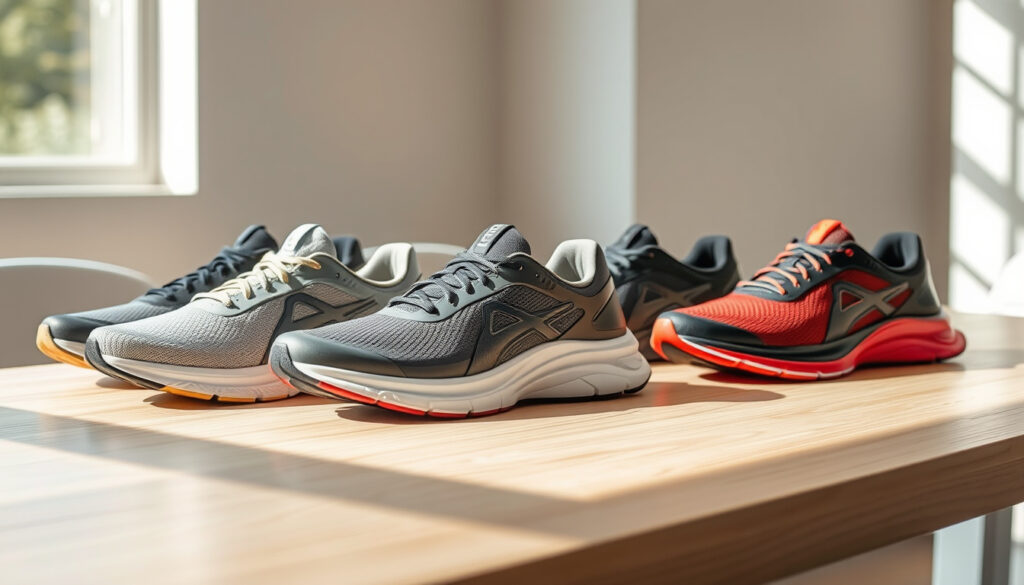
Nike Running Shoes – Complete Buyer’s Guide 2025
Nike’s running shoe lineup for 2025 and 2026 spans everything from daily trainers like the Pegasus to elite marathon racers such as the Alphafly. With multiple models, cushioning technologies, and price points, choosing the right pair can be a challenge. This guide breaks down the key models, their intended uses, and what to consider before buying.
The range is easiest to understand in four categories: daily training (Pegasus), max-cushion comfort (Vomero and Invincible), race day (Alphafly and Vaporfly), and stability support (Structure). Each category serves a different purpose, and the best choice depends on your running style, goals, and budget.
Nike’s own buying guides advise selecting shoes based on run type and fit, with road shoes for pavement, trail shoes for off-road, and a true-to-size fit with about a thumb’s width of space at the toe. This article applies that same thinking to help you match the right model to your needs.
What Is the Best Nike Running Shoe for You in 2025?
| Model | Best For | Cushioning Tech | Drop | Weight (M9) | Price Range |
|---|---|---|---|---|---|
| Nike Pegasus 42 | Daily Training | ReactX + Air Zoom | 10mm | 10.2 oz | £120 – £130 |
| Nike Vomero 18 | Max Cushion / Recovery | ZoomX | 10mm | 10.8 oz | £150 – £160 |
| Nike Invincible 4 | Max Cushion / Easy Runs | ZoomX | 9mm | 10.9 oz | £170 – £180 |
| Nike Alphafly 3 | Marathon Racing | ZoomX + Air + Carbon | 8mm | 7.4 oz | £280 – £285 |
| Nike Vaporfly 3 | Half/Full Marathon Racing | ZoomX + Carbon | 8mm | 6.9 oz | £220 – £230 |
| Nike Streakfly | Track / Short Races | ZoomX | 6mm | 6.5 oz | £140 – £150 |
| Nike Winflo 11 | Budget / Beginner | Air Zoom | 10mm | 10.0 oz | £90 – £100 |
| Nike Revolution 7 | Budget / Walking | Foam | 9.5mm | 10.4 oz | £65 – £75 |
Prices and weights are approximate, based on Men’s US size 9. UK/EU pricing varies by retailer.
- Nike utilizes four primary cushioning technologies: ZoomX (Pebax-based premium foam), React (EVA-based), ReactX (updated with lower carbon footprint), and Air Zoom (pressurized air units).
- The Nike Vomero lineage has been re-engineered: moving from a React-based luxury trainer to a max-cushion ZoomX model in its 18th version, directly competing with the Invincible.
- Nike’s super shoes (Alphafly, Vaporfly) dominate racing podiums but have significantly shorter lifespans (~150–250 miles) compared to daily trainers like the Pegasus (~300–500 miles).
- Sizing consistency is a known consideration: the Alphafly and Vaporfly fit narrow; the Pegasus fits standard; the Invincible fits slightly tight in the midfoot.
- Sustainability is becoming a greater factor; Nike’s Next Nature and Reuse-A-Shoe programs are steps forward, though premium performance shoes still rely heavily on virgin materials.
| Fact | Detail |
|---|---|
| First Nike Running Shoe | The ‘Nike Cortez’, introduced in 1972, was the first official Nike running shoe, designed by Bill Bowerman. |
| Longest Running Series | The Nike Pegasus, first released in 1983, is Nike’s longest-running performance shoe line, now in its 42nd iteration. |
| Breakthrough Innovation | The Nike Vaporfly 4% (2016) revolutionized the sport with its ZoomX foam and carbon fiber plate, scientifically proven to improve running economy by 4%. |
| Primary Cushioning Platforms | Nike currently produces shoes with ZoomX, React, ReactX, and Air Zoom cushioning, covering everything from elite racing to budget training. |
| Global Market Leader | Nike holds the largest market share in the global athletic footwear market, with running shoes as a massive and consistently growing segment. |
| Sustainability Goals | Nike aims to achieve net-zero carbon emissions by 2050, partially through its Reuse-A-Shoe recycling program and the use of recycled materials in its Next Nature line. |
What is the most comfortable Nike running shoe?
The Vomero 18, now equipped with full-length ZoomX foam, is widely regarded as Nike’s most comfortable road shoe. In current 2026 roundups, the Vomero Plus is repeatedly ranked as a top overall road shoe and the best cushioning pick, while the Vomero 18 appears as an all-around favorite in several guides. The Invincible line offers a similar level of softness but with a taller, less stable platform that some runners find less reassuring on longer runs.
Which Nike shoe is best for daily running?
The Pegasus remains the default answer. Nike’s own guide uses Pegasus as a core road-running recommendation, and third-party buyer guides repeatedly name Pegasus models as the best value, beginner, or general daily trainer option. For 2026, reviewers point to the Pegasus 42 as the beginner-friendly daily shoe and the Pegasus 41 / Pegasus Plus family as the best balance of durability, responsiveness, and value under about $150.
Which Nike running shoe is best for marathon racing?
The Alphafly is Nike’s elite marathon racer. Runner’s World describes it as Nike’s premium marathon racing shoe, specifically calling out PEBA, a Flyplate, and Zoom Air units. In multiple reviews and guides, the Alphafly 3 is the clear marathon-racing pick, though it is also one of Nike’s most expensive shoes. The Vaporfly 3 is a lighter alternative that many runners choose for 5K to half-marathon distances.
What is the best Nike running shoe for beginners?
For new runners, the Pegasus 42 is the most balanced and forgiving entry point. It offers enough cushioning for comfort, a reasonable price, and a fit that works for most foot shapes. The Winflo 11 is a more budget-friendly alternative that still provides a reliable ride for those just starting out.
Nike Vomero vs Pegasus vs Invincible: What’s the Difference and Which Should You Choose?
These three models represent the core of Nike’s daily training and comfort lineup, but they serve distinct purposes. The Pegasus is the balanced all-rounder, the Vomero is the premium cushioned cruiser, and the Invincible is the softest-feeling option for easy and recovery runs.
The Pegasus uses ReactX foam and dual Air Zoom units for a responsive, durable ride. The Vomero 18 now uses full-length ZoomX foam, the same material found in Nike’s race shoes, making it significantly softer and more energetic than the Pegasus. The Invincible also uses ZoomX but in a thicker stack, giving it the plushest feel of the three. The tradeoff is stability: the Invincible’s tall, soft platform can feel less secure for some runners, especially at faster paces.
What is the difference between Nike React and ZoomX?
React is Nike’s EVA-based foam, designed for durability and a balanced, responsive feel at a moderate price. It appears in the Pegasus and many other daily trainers. ZoomX is a Pebax-based premium foam that is lighter, softer, and more energy-returning. It is used in the Vomero 18, Invincible, and all of Nike’s super shoes. In practical terms, ZoomX delivers a more cushioned and lively ride, but it is more expensive and generally less durable than React.
Which offers better value: Invincible, Vomero, or Pegasus?
The Pegasus offers the best value for runners who want one shoe for most of their mileage. It costs less than both the Vomero and Invincible while providing reliable performance across a wide range of runs. The Vomero justifies its higher price with a softer, more protective ride that appeals to runners who prioritize comfort above all else. The Invincible, while extremely comfortable, is the most expensive of the three and is best suited as a secondary shoe for easy days rather than a primary trainer.
How Do Nike Running Shoes Fit? A Guide to Sizing, Width, and Support
Nike’s official guidance says to prioritize comfort, avoid toe slippage or excessive constriction, and aim for a thumb’s width between your longest toe and the end of the shoe. Nike also says shoes should generally fit true to size. However, fit varies across models, and some runners may need to adjust.
The Pegasus fits true to size for most runners. The Vomero also fits true to size but offers a roomier toe box than older versions. The Invincible 3 fits true to size with a snug premium Nike fit, according to one 2025 review. The Alphafly and Vaporfly fit narrow, and many runners prefer to go half a size up in these models, especially for marathon distances.
Are Nike running shoes good for flat feet or overpronation?
Nike’s primary stability model is the Structure, which is designed for runners who need additional support for overpronation. The Pegasus and Vomero are neutral shoes and do not offer built-in stability features. Runners with flat feet who do not require heavy correction may still find the Vomero’s wide platform and soft cushioning comfortable, but those with significant overpronation should consider a dedicated stability shoe.
Do Nike running shoes have good arch support?
Arch support in Nike running shoes varies by model. Neutral trainers like the Pegasus and Vomero offer moderate arch support suitable for most runners with normal arches. Runners with high arches may find the Vomero’s plush cushioning more accommodating, while those with flat feet may need additional aftermarket insoles or a dedicated stability model. The American Academy of Podiatric Sports Medicine notes that choosing the wrong type of running shoe for your foot type and gait cycle is a common contributor to running-related injuries.
What are the best Nike running shoes for wide feet?
Nike offers select models in wide (2E) and extra-wide (4E) sizes, though availability varies by region and model. The Pegasus is the most widely available in wide widths. The Vomero and Invincible have naturally roomier toe boxes than some of Nike’s narrower performance models, which may suit some runners with wide feet even in standard sizing. The Alphafly and Vaporfly are not recommended for wide feet as they fit narrow.
How Long Do Nike Running Shoes Last and How to Care for Them?
The lifespan of a Nike running shoe depends on the model, the runner’s weight and gait, and the surfaces on which it is used. General estimates provide a useful starting point.
Daily trainers like the Pegasus typically last between 300 and 500 miles, depending on usage and care. Premium cushioned models like the Vomero and Invincible are in a similar range, though the softer foam may show wear earlier. Super shoes like the Alphafly and Vaporfly have shorter lifespans, typically 150 to 250 miles, because their lightweight foams and carbon plates are optimized for performance rather than long-term durability. Exact durability varies significantly between runner weight, gait, and usage surface.
How should I clean Nike running shoes properly?
Nike recommends cleaning running shoes with a mild soap and cold water, using a soft brush or cloth to remove dirt. Shoes should be air-dried at room temperature, away from direct heat sources like radiators or sunlight, which can damage the foams and adhesives. Machine washing is not recommended as it can degrade the shoe’s structure and cushioning.
Does Nike have a recycling program for running shoes?
Yes, Nike operates the Reuse-A-Shoe program, which recycles old athletic shoes of any brand into surface materials such as sports courts, tracks, and playgrounds. The program is part of Nike’s broader Move to Zero sustainability initiative, which aims to achieve net-zero carbon emissions by 2050. Nike also produces a Next Nature line that incorporates recycled materials into new products.
Are Nike Running Shoes Good for Walking or Just Running?
Many Nike running shoes are suitable for walking, particularly the models with softer cushioning. The Revolution 7 is specifically designed as a budget-friendly option that works well for walking and casual wear. The Pegasus, with its balanced cushioning, is also a popular choice for all-day wear and walking. Race shoes like the Alphafly and Vaporfly are not recommended for walking due to their aggressive geometry and stiff carbon plates.
What is the best budget Nike running shoe?
The Pegasus is the most frequently recommended budget-friendly option, offering a strong balance of performance and durability at a reasonable price. The Winflo 11 is another solid choice for runners who want to spend less, while the Revolution 7 is the most affordable model in the lineup and is well-suited for walking and light running. Pegasus or Winflo-type models are commonly cited as better value choices in buyer guides.
Is the Nike Alphafly worth its high price?
The Alphafly 3 is priced at approximately £280–£285, making it one of the most expensive running shoes on the market. For runners targeting a marathon personal best, the combination of ZoomX foam, a carbon Flyplate, and Zoom Air units provides a verified metabolic efficiency advantage during race-paced running. However, its limited lifespan (150–250 miles) and narrow fit mean it is not a good value for everyday training. For most runners, a Pegasus or Vomero paired with a race-day shoe is a more practical investment.
A Brief History of Nike Running Shoes: Key Milestones
- 1964 – Blue Ribbon Sports (Nike) founded in Oregon by Bill Bowerman and Phil Knight.
- 1972 – Nike Cortez released, becoming an iconic running shoe during the 1970s running boom.
- 1978 – Nike Tailwind released, first shoe with Air-Sole cushioning.
- 1983 – Nike Pegasus released, designed as the ‘everyday running shoe.’
- 1987 – Nike Air Max 1 introduced visible Air cushioning, changing shoe design permanently.
- 2006 – Nike Vomero launched as a premium cushioned trainer with a higher price point.
- 2016 – Nike Vaporfly 4% released with ZoomX foam and carbon fiber plate, starting the ‘super shoe’ era.
- 2017 – Nike Breaking2 project (Eliud Kipchoge attempts sub-2:00 marathon in Vaporfly prototypes).
- 2019 – Nike Alphafly NEXT% released, featuring Air Pods and ZoomX.
- 2022 – Nike Invincible 3 launched, bringing max ZoomX cushioning to daily trainers.
- 2024 – Nike Pegasus 42 introduced with ReactX foam, reducing carbon footprint. Vomero 18 transitions to full ZoomX.
- 2025 – Alphafly 3 and Vaporfly 3 dominate marathon majors. Focus on Next Nature materials expands to core running lines.
What Is Known and What Remains Unclear About Nike Running Shoes
| Established Information | Information That Remains Unclear |
|---|---|
| Nike ZoomX is the company’s lightest and most energy-returning foam, derived from Pebax, used in all elite racing shoes and some premium trainers. | Exact durability (mileage lifespan) varies significantly between runner weight, gait, and usage surface; independent testing shows more variance than lab estimates. |
| The Nike Vomero 18 now features full-length ZoomX foam, making it the most cushioned shoe in the standard road-running lineup (excluding the Invincible). | The specific environmental impact of ReactX vs standard React is debated; Nike claims a 43% reduction in carbon footprint, requiring external context. |
| The Nike Pegasus, with its ReactX foam and dual Air Zoom units, remains the most balanced and best-selling model for daily neutral training. | Fit consistency across the entire Nike running shoe line is variable; lasts vary significantly between performance (narrow) and standard models. |
| Nike’s super shoes (Alphafly, Vaporfly) provide a verified metabolic efficiency advantage during marathon-paced running. | Future model release dates and specifications (e.g., Pegasus 43, Vomero 19) are speculative until officially confirmed by Nike. |
| Nike operates the ‘Reuse-A-Shoe’ program, recycling old athletic shoes of any brand into surface materials. | The long-term efficacy of ‘super shoes’ for daily training, regarding injury prevention vs performance enhancement, remains an ongoing subject of sports science research. |
Why Nike Dominates the Running Shoe Market
Nike is the undisputed market leader in running shoes, driven by powerful innovation (ZoomX, Carbon Plate, ReactX), massive marketing, and iconic athlete partnerships. The competitive landscape is intense, with Adidas (Lightstrike Pro), ASICS (FF Blast Plus), Hoka (PEBA), and Saucony (PWRRUN PB) providing excellent alternatives. The key trend is the ‘super trainer’—bringing race shoe technologies into durable daily trainers.
Buyers must evaluate their primary running needs: daily mileage (Pegasus/ReactX), recovery/comfort (Vomero/Invincible), or race day performance (Alphafly/Vaporfly). Budget and durability are critical; a £285 Alphafly is inefficient for daily runs, while a £115 Pegasus is highly versatile. Foot type is paramount; the Vomero offers a plush neutral ride, while dedicated stability models (e.g., Structure) cater to pronation.
Nike’s focus on elite performance (super shoes) creates a high price floor for premium technology. Critics note the lack of extensive dedicated stability/trail offerings compared to specialists like Brooks or Hoka. The environmental impact of high-performance foams (Pebax/ZoomX) is an emerging concern, despite Next Nature promises.
What Experts and Sources Say About Nike Running Shoes
“The Nike Vomero 18 is a fantastic shoe for runners who prioritize plush comfort above everything else, finally bringing ZoomX to the high-cushion daily trainer category.”
— Runner’s World Shoe Review (2025)
“ReactX foam reduces its carbon footprint by 43% compared to the prior React foam, while designed to provide the same or improved performance.”
— Nike News (ReactX Launch)
“Choosing the wrong type of running shoe for your foot type and gait cycle is a common contributor to running-related injuries.”
— American Academy of Podiatric Sports Medicine (AAPSM)
How to Choose the Right Nike Running Shoe: A Summary
The best Nike running shoe for you depends on your primary running purpose, your foot shape, and your budget. For daily training and versatility, the Pegasus is the most balanced and widely recommended choice. For maximum comfort and easy runs, the Vomero or Invincible deliver a soft, protective ride. For race day, the Alphafly and Vaporfly offer elite-level performance. Runners who prioritize value should look at the Pegasus or Winflo lines. For more detailed guidance, refer to the Nike running shoes buying guide for official recommendations on fit and selection.
Before making a final decision, it helps to read about the Nike Vomero vs Pegasus comparison to see how these models stack up in real-world conditions.
Frequently Asked Questions About Nike Running Shoes
What is the lightest Nike running shoe?
The Nike Streakfly is the lightest at approx. 6.5 oz (Men’s 9), designed for short road races (5K/10K). Among super shoes, the Vaporfly 3 (6.9 oz) and Alphafly 3 (7.4 oz) are also very light.
What is the best Nike trail running shoe?
Nike’s primary trail offering is the Pegasus Trail (e.g., 5). For extreme terrain, the Nike Ultrafly uses ZoomX and a carbon plate, while the Wildhorse and Kiger cater to different trail conditions. The Pegasus Trail is the most versatile for mixed road/trail use.
How long does it take to break in a new pair of Nike running shoes?
Most modern Nike running shoes (Pegasus, Vomero, Invincible) require a minimal break-in of 10-20 miles. Race day shoes like the Alphafly require more adaptation due to the carbon plate and aggressive geometry.
Where are Nike running shoes manufactured?
The majority of Nike running shoes are manufactured in Vietnam, Indonesia, and China. A smaller percentage are produced in India and other Asian countries. Nike does not manufacture performance running shoes in the USA or Europe outside of limited prototypes.
Are Nike running shoes good for walking?
Yes, the Pegasus and Revolution 7 are popular choices for walking. The Vomero’s soft cushioning also works well for all-day comfort. Race shoes like the Alphafly are not recommended for walking due to their stiff carbon plates.
What is the best budget Nike running shoe?
The Pegasus offers the best balance of price and performance. The Winflo 11 and Revolution 7 are more affordable options, with the Revolution 7 being the most budget-friendly choice for walking and light running.
How should I clean Nike running shoes properly?
Use mild soap and cold water with a soft brush. Air-dry at room temperature away from direct heat. Machine washing is not recommended as it can damage the foams and adhesives.
More related posts
 Where to Watch MobLand – UK and US Streaming Guide
 Cameron Diaz – Return to Acting, Net Worth, Family in 2025
 Bon Jovi – Band History, Songs, and 2025 Tour Updates
 Prunella Scales – Obituary, Cause of Death, and Legacy
 Diversified Energy Share Price – High Yield and Hidden Risks
 Esteban Ocon – Biography, Career Stats and 2025 Season
 Clare Holman – Biography, Age, Career and Net Worth