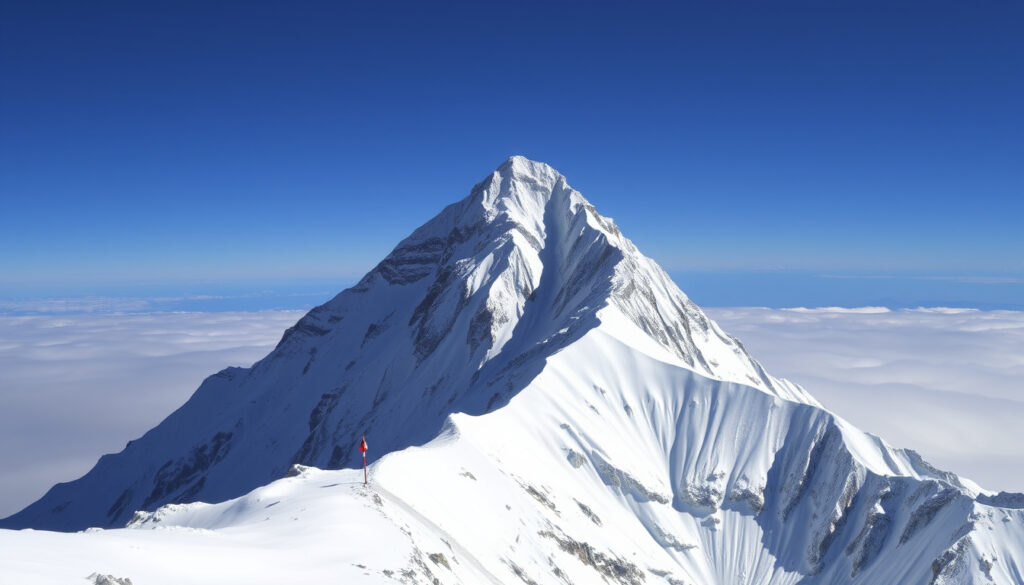
Everest Peak – Official Height, Location and Death Zone Facts
Mount Everest, the world’s highest mountain above sea level, stands at a confirmed height of 29,032 feet (8,848.86 meters) on the border of Nepal and China (Tibet). This article provides verified facts about its elevation, location, Base Camp, climbing routes, and the human stories that have unfolded on its slopes. For those interested in general pet care, you might also find our Miniature Dachshund – Complete Guide to Lifespan, Size and UK Puppy Buying helpful.
The mountain has been surveyed multiple times, most recently in 2020 when Nepal and China jointly agreed on a new official height. Its location in the Mahalangur Himal sub-range places it at the heart of the Himalayas, a region known for extreme altitude and challenging climbing conditions. Approximately 1 in 25 climbers who attempt the summit do not survive, making it one of the most dangerous peaks on Earth.
What Is the Exact Height of Mount Everest in Feet and Meters?
The official height of Mount Everest, as agreed upon by Nepal and China in 2020, is 29,031.69 feet (8,848.86 meters). This measurement resolved a long-standing discrepancy between the two countries’ previous surveys.
- Height: 29,031.69 ft (8,848.86 m)
- Location: Nepal / China border
- Base Camp Elevation: 17,598 ft (5,364 m)
- First Ascent: 1953 by Hillary and Norgay
Key insights about Everest’s height and significance:
- The official height was revised in 2020 to 8,848.86 meters, ending a decades-long dispute.
- Everest grows approximately 4 mm per year due to the ongoing collision of the Indian and Eurasian tectonic plates.
- The Everest Base Camp trek is 130 km round trip, typically taking 12–14 days.
- Over 300 climbers have died on the mountain since 1922.
- The death zone begins at 8,000 m (26,247 ft), where oxygen levels are only about one-third of those at sea level.
- Climbers can survive in the death zone for only 16–20 hours without supplemental oxygen.
| Fact | Detail |
|---|---|
| Official Height (2020) | 29,031.69 ft (8,848.86 m) |
| Location | Mahalangur Himal, Nepal/China border |
| First Ascent | May 29, 1953 |
| Total Deaths (1922–2023) | 318 people (193 climbers, 125 guides/support) |
| Base Camp Elevation (South) | 17,598 ft (5,364 m) |
| Best Climbing Season | April–May (pre-monsoon) |
In Which Country Is Mount Everest Located?
Mount Everest sits on the border between Nepal and China (Tibet). Its exact coordinates are approximately 27°98′N, 86°92′E. The mountain is part of the Mahalangur Himal sub-range of the Himalayas.
Where Is Mount Everest on a Map?
On a map, Everest is located in the Khumbu region of northeastern Nepal and the Tingri County of Tibet. The south side (Nepal) is accessed via the town of Lukla, while the north side (Tibet) is approached from the Tibetan Plateau. The coordinates are widely used for navigation and are included in official geographic databases.
The exact border line on the summit has been a subject of diplomatic agreement. Nepal and China jointly confirmed the 2020 height measurement, which also reaffirmed the mountain’s location on the border.
What Is the Elevation of Everest Base Camp?
Everest has two main Base Camps: the South Base Camp in Nepal at 5,364 m (17,598 ft) and the North Base Camp in Tibet at 5,200 m (17,060 ft). The South Base Camp is the more popular starting point for summit attempts.
How Long Does It Take to Hike to Everest Base Camp?
The trek from Lukla to Everest Base Camp (South) covers approximately 130 km round trip and typically takes 12–14 days. This allows for proper acclimatization to reduce the risk of altitude sickness. Most trekkers do not ascend beyond Base Camp.
What Is the Best Time to Climb Mount Everest?
The primary climbing season is April–May (pre-monsoon), when weather windows are most reliable. A secondary season in September–October is also possible but less popular. Winter and monsoon seasons are generally avoided due to extreme cold and heavy snowfall.
Trekkers should plan rest days at key altitudes (e.g., Namche Bazaar, Dingboche) to help their bodies adjust. The most common cause of trek-related deaths is altitude illness or underlying health conditions exacerbated by the high altitude.
The death zone begins at 8,000 m (26,247 ft). Above this altitude, supplemental oxygen is essential. Most summit fatalities occur during the descent from the summit within the death zone.
What Is the ‘Sleeping Beauty’ Story on Mount Everest?
The term “Sleeping Beauty” is not a standard reference in Everest climbing history. It is sometimes confused with the story of Francys Arsentiev, who died on Everest in 1998 and whose body remained visible for years. Other notable deaths include David Sharp (2006), who collapsed in the death zone, and Rob Hall and Scott Fischer, who died during the 1996 storm famously documented in Into Thin Air. In 2023, a deaf climber named Hawari Bin Hashim went missing from Camp IV, which may have been misreported as “Sleeping Beauty” in some accounts.
How Many People Have Died on Mount Everest?
From 1922 to 2023, a total of 318 people have died on Everest, including 193 climbers and 125 guides or support staff. The average yearly death toll is about 6.2. The most dangerous areas are the Khumbu Icefall (47 deaths) and the death zone above 8,000 m. Falls and avalanches each account for more than 70 deaths. The 2015 earthquake avalanche killed 19 at Base Camp, marking the deadliest single-day event on the mountain.
For trekkers who do not climb, the risk is far lower: an estimated 3–5 deaths per year among non-climbers, with a death rate of about 0.03%. Most trek deaths occur before reaching Base Camp and are due to altitude-related illnesses.
How Has the Height of Mount Everest Been Measured Over Time?
- 1856: The Great Trigonometrical Survey of India identifies Peak XV as the highest mountain, with a height of 29,002 ft.
- 1953: First ascent by Edmund Hillary and Tenzing Norgay; no official height change.
- 1999: A GPS measurement by the National Geographic Society and Boston Museum of Science records 29,035 ft (8,850 m).
- 2015: The Nepal earthquake shifts the mountain slightly, prompting renewed surveys.
- 2020: Joint Nepal-China survey establishes the current official height of 29,031.69 ft (8,848.86 m).
What Do We Know for Certain About Mount Everest and What Remains Unclear?
| Established Information | Information That Remains Unclear |
|---|---|
| Height is confirmed by multiple surveys (2020 consensus). | Minor variations exist due to snow depth and tectonic movement; future surveys may adjust the figure slightly. |
| Death toll is approximately 318 (1922–2023), but exact numbers vary by source. | The exact number of bodies remaining on the mountain is not publicly documented. |
| Location is undisputed: border of Nepal and Tibet (China). | The precise border line on the summit is not physically marked and is subject to diplomatic agreement. |
| The “Sleeping Beauty” story is not a standard term; it is likely a confusion with other climbers. | Whether the term refers to Francys Arsentiev, David Sharp, or another individual remains ambiguous in popular accounts. |
What Is the Broader Context of Mount Everest’s History and Risks?
Mount Everest remains the tallest mountain on Earth above sea level. Its height was officially recalibrated in 2020 to 8,848.86 meters, resolving a long-standing discrepancy between Chinese and Nepalese measurements. The mountain continues to rise slowly due to the ongoing collision of the Indian and Eurasian tectonic plates. The “Sleeping Beauty” reference is often mistakenly associated with Francys Arsentiev, who died on Everest in 1998 and became a well-known landmark on the mountain. For a completely different topic, you might also read our Human Cat Years – Calculator, Chart & Vet-Approved Guide.
Climate change is affecting glacier stability on the mountain, and future height surveys may be conducted after major seismic events. Climbing seasons continue to see record numbers of permit applications, with approximately 800–1,000 climbers attempting the summit each year.
What Do Authoritative Sources Say About Mount Everest?
“Mount Everest is the highest mountain on Earth above sea level.”
— Wikipedia
“Reaching an elevation of 29,032 feet (8,849 meters), Mount Everest is the highest mountain in the world.”
— Britannica
“Mt. Everest, rising 29,031.69 ft. (8,848.86 m) above sea level, reigns as the highest mountain on Earth.”
— Alpine Ascents
What Are the Key Takeaways About Mount Everest?
Mount Everest is the world’s highest peak, standing at 29,031.69 ft (8,848.86 m) on the Nepal-Tibet border. While the Base Camp trek is relatively safe, climbing the mountain carries a 1 in 25 death rate, with most fatalities occurring in the death zone. The official height was last updated in 2020, and the mountain continues to rise slowly. For those seeking more general guides, our article on Miniature Dachshund – Complete Guide to Lifespan, Size and UK Puppy Buying offers unrelated but useful information.
Frequently Asked Questions
How many people climb Everest each year?
Approximately 800–1,000 climbers attempt the summit annually, with record numbers in recent years.
Can you see Everest from space?
Yes, but it is not the most prominent feature; the entire Himalayan range is visible from orbit.
What is the death zone on Everest?
Above 26,247 ft (8,000 m), where oxygen is insufficient for human life without supplemental oxygen.
How much does it cost to climb Everest?
Permits and expeditions range from $35,000 to $100,000+, depending on the level of support and logistics.
What is the death rate for Everest climbers?
Approximately 1 in 25 climbers dies attempting the summit, making it one of the most dangerous mountains.
How many people died in the 2015 Everest avalanche?
19 people were killed at Base Camp during the earthquake-triggered avalanche, the deadliest single-day event on the mountain.
Is Mount Everest getting taller?
Yes, it grows about 4 mm per year due to tectonic plate movement, but major earthquakes can cause slight shifts.
What is the best time for the Everest Base Camp trek?
The best times are spring (March–May) and autumn (September–November), when weather is mild and skies are clear.
More related posts
 Alexander Isak – Age, Origin, Family and Career Stats
 Tesla Supercharger Near Me – UK Stations, Prices & Live Info
 Olivia Wilde – Biography, Movies, Relationships & 2026
 Lola Tung – Age, Height, Parents, and Career Facts
 Laundry Basket with Lid – Top Picks for 2025
 Prince Louis – Age, Full Name, and Public Appearances
 Human Cat Years – Calculator, Chart & Vet-Approved Guide
 Bayern vs Union Saint-Gilloise – Kane Brace Secures Round of 16