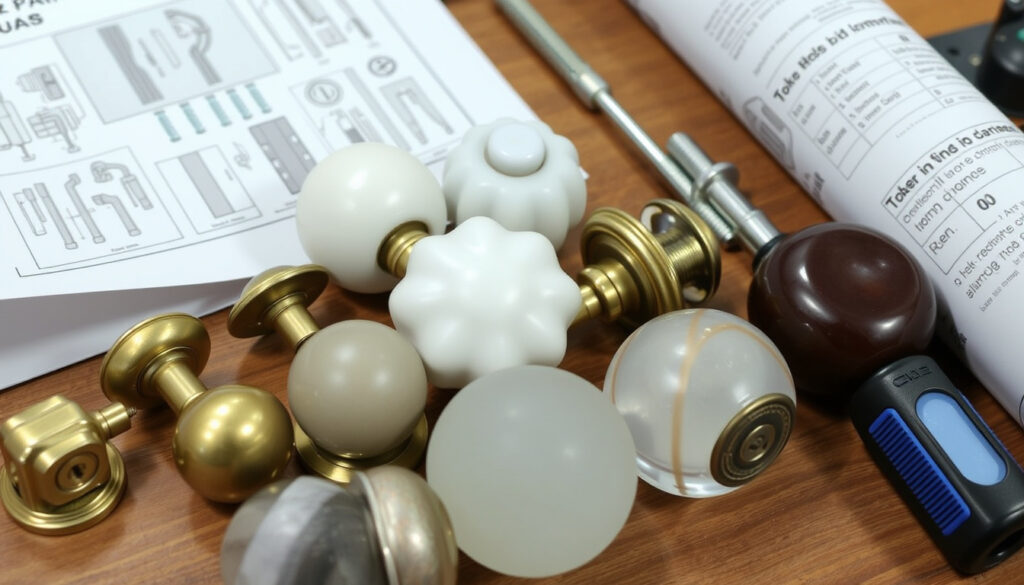
Door Knob – Types, Materials and Installation Guide
Choosing a door knob for a UK home involves more than picking a style you like. The right choice depends on the mechanism type, material and finish, and whether the knob is compatible with your door and latch. Before buying, you need to check door thickness, backset, case depth, and whether your door requires a mortice or rim knob set. For a broader overview, the Door knobs complete guide covers the full range of options.
Door knobs come in several functional categories, each designed for a specific location and purpose. Understanding these differences is the first step toward a successful purchase.
The UK market offers a wide range of materials and finishes, from solid brass and porcelain to chrome and matte black. Matching the knob to the door’s style and function is essential for both aesthetics and long-term performance.
What Are the Different Types of Door Knobs?
Passage, Privacy, Dummy, Keyed
Brass, Porcelain, Glass, Chrome, Wood
Easy (30-60 min with basic tools)
£5 – £50 (standard designs)
The majority of UK households have passage knobs on internal doors, while privacy knobs with twist locks are common on bathrooms and bedrooms, according to industry observations. Brass remains the most popular material for traditional and period homes, while chrome and matte black dominate modern interiors, a pattern visible in catalogues from Screwfix and The Door Handle Company.
External door knobs require higher durability and often include a key lock. Many modern rim knobs comply with British Standard BS 8621 for security, as noted by the British Standards Institution.
- Passage knobs have no locking function and are used for hallways, closets, and internal doors that do not need privacy.
- Privacy knobs include a push-button or turn-lock on the inside, with an emergency release on the outside for bathrooms and bedrooms.
- Dummy knobs are decorative only, fitted to doors that do not require a working latch.
- Keyed entry knobs provide security and are typically used on external or main entry doors.
- Mortice knobs are designed for mortice locks or latches fitted into the edge of the door.
- Rim knobs are designed for surface-fixed rim locks or latches, often found in period homes.
- Standard round knobs are the most common shape, but mushroom-shaped, tulip-shaped, and oblong rim styles are also available.
| Fact | Detail |
|---|---|
| Standard backplate diameter | 50-60 mm (rose type) or backplate length 150-200 mm (long plate) |
| Spindle size | Typically 8 mm square, but 7 mm and 6 mm exist for older doors |
| Spring mechanism | Most internal door knobs use a spring to return the knob to horizontal |
| Privacy lock system | Push-button or turn-lock inside, with emergency release outside |
| Terminology | ‘Door knob’ is often used interchangeably with ‘door handle’ in the UK, but a knob is spherical or oval while a handle is a lever |
| Standard knob diameter | 50–60 mm, with 55 mm treated as a universal size |
| Door thickness reference | 44 mm is a common standard |
| Backset measurements | Commonly 44 mm or 65 mm |
| Case depth | Often 64 mm or 76 mm |
| Recommended handle height | 900–1050 mm from the floor, with about 1000 mm cited as typical |
Passage, Privacy, Dummy, and Keyed Knobs Explained
Passage knobs are the simplest type. They have no locking function and are intended for hallways, closets, and similar internal doors where privacy is not required. Privacy knobs, by contrast, include a simple locking mechanism, usually a push-button or turn-lock on the interior side, with a small release on the outside for emergencies. Dummy knobs are purely decorative and are used on doors that do not need a latch, such as double doors or cupboard fronts. Keyed entry knobs add a lock cylinder for security and are most often fitted to external or front doors.
Internal vs External Door Knobs: Design and Security Differences
Internal door knobs prioritise ease of use and style. They do not need to withstand weather or forced entry. External door knobs, on the other hand, must resist corrosion and provide adequate security. For external doors, stainless steel or outdoor-treated polished brass are recommended. The choice also depends on the existing lockset and door material, particularly when replacing a lockset on a front door.
Wardrobe and Furniture Knobs vs Full Door Knobs
Wardrobe and furniture knobs are smaller and lighter than full door knobs. They are designed for cabinets, drawers, and wardrobes, and typically do not include a latch mechanism. Full door knobs, by contrast, include a spindle, latch, and strike plate, and are built to handle the weight and repeated use of a full-sized door.
How to Choose the Right Door Knob: Materials, Finishes, and Style
Material choice affects both appearance and longevity. Solid brass is valued for its durability and classic look, making it a popular choice for traditional and period homes. Wood offers a warmer, traditional appearance. Ceramic and glass are common decorative choices, often used in Victorian-style homes. Nickel, chrome, iron, and zinc alloys are also widely used.
For external doors, stainless steel or outdoor-treated polished brass are recommended for their weather resistance. Finishes such as polished brass, antique brass, satin brass, satin nickel, chrome, and matte black are frequently mentioned by UK guides as suitable options.
Brass, Porcelain, Glass, Chrome and Wood: Pros and Cons
Solid brass is durable and develops a natural patina over time if unlacquered. Porcelain and glass offer a decorative, period-appropriate look but are more fragile. Chrome provides a modern, reflective finish that is easy to clean. Wood is warm and traditional but may warp if unvarnished, especially in humid conditions. The durability of wooden door knobs depends heavily on the wood type and finish.
Finish Durability: Lacquered vs Polished vs Antique
Finish longevity varies by brand and wear. Lacquered brass retains its polished appearance longer but can peel over time. Unlacquered brass develops a natural patina, which some homeowners prefer. Antique brass finishes may be lacquered or unlacquered, so it is important to check the product specifications before buying.
Matching Door Knobs to Your Door Style (Victorian, Modern, etc.)
For Victorian-style homes, ornate designs with porcelain, cut glass, and intricate brass backplates are appropriate. Modern interiors tend to suit chrome, satin nickel, or matte black finishes with clean, minimal lines. Oak doors often pair well with satin brass or antique brass, while painted doors can accommodate a wider range of finishes.
How to Install a Door Knob: Step-by-Step Guide
Installing a door knob is a straightforward task for most DIYers. The basic tools required are a screwdriver, tape measure, drill or hole saw for new holes, and a chisel for mortising the latch area. You will also need the spindle, latch mechanism, strike plate, and screws supplied with the set.
Tools Required and Preparation
Before starting, gather the tools listed above. Measure the door thickness, backset, and case depth to ensure the new knob will fit. If fitting a new knob to an unprepared door, mark the handle height, transfer the centre line, and drill the latch hole on the door edge.
Measuring the Backplate and Spindle
Standard backplate diameters are 50-60 mm for rose types, or 150-200 mm for long plates. The spindle is typically 8 mm square, but 7 mm and 6 mm sizes exist for older doors. Measure the existing spindle hole and backplate before ordering a replacement.
Remove the old knob by unscrewing the interior fixing screws and separating both sides. Remove the latch from the door edge. Insert the new latch with the beveled side facing the closing direction. Secure with screws, avoiding overtightening. Feed the spindle through the latch and attach both knob halves. Tighten the fixing screws and test the mechanism.
Step-by-Step Fitting Process
- Remove the old knob by unscrewing the interior fixing screws and separating both sides of the knob.
- Remove the latch from the edge of the door.
- Insert the new latch into the door edge, making sure the beveled side faces the closing direction.
- Secure the latch with screws, avoiding overtightening.
- Feed the spindle through the latch and attach both knob halves on either side of the door.
- Tighten the fixing screws, then test that the knob turns freely and the latch engages properly.
- If fitting a new knob to an unprepared door, mark the handle height, transfer the centre line, drill the latch hole on the door edge, drill the main spindle hole through the face, fit the latch, then install the handles and strike plate.
Common Mistakes and Troubleshooting
Overtightening the latch screws can cause the latch to bind. Ensure the spindle is the correct length for the door thickness. If the knob does not turn freely, check that the spindle is aligned and the latch is properly seated. Knobs must match the latch type: mortice knobs for mortice latches, rim knobs for rim latches.
Some knob sets use square spindle systems, and some include backplates or separate rose fittings. Always verify that the new knob set is compatible with your existing latch and door preparation before purchasing. The A guide to buying door knob sets offers practical advice on matching knobs to latches.
History of Door Knobs
Door knobs have evolved significantly over the centuries, reflecting changes in manufacturing, design, and security requirements.
- 18th Century: First decorative door knobs appear in England, often made of brass or wood, with simple latches.
- Victorian Era (1837-1901): Ornate designs with porcelain, cut glass, and intricate brass backplates become popular in middle-class homes.
- Early 20th Century: Mass production makes door knobs affordable; bakelite and chrome emerge as new materials.
- Post-WWII: Standardised sizes and spring mechanisms become common; aluminium and plastic knobs appear.
- 21st Century: Smart knobs with keyless entry enter the market, alongside renewed interest in heritage finishes and sustainable materials.
What Is Known and What Remains Uncertain About Door Knob Durability
| Established Information | Information That Remains Unclear |
|---|---|
| Most UK standard door knobs use an 8 mm square spindle. | Durability of wooden door knobs depends heavily on wood type and finish – unvarnished wood may warp. |
| Privacy door knobs include a lock that can be unlocked from the outside with a small tool. | Finish longevity varies by brand and wear; ‘antique brass’ may be lacquered or unlacquered. |
| External door knobs should be weather-resistant and may require a key lock for security. |
Analysis and Buying Context
Door knobs are a small but crucial element of interior design and home security. The UK market is dominated by brands like Carlisle Brass, Hoppe, and Heritage Brass, sold via Screwfix, Toolstation, and specialist online retailers. When selecting a door knob, consider the door’s purpose, thickness, and existing décor. Privacy knobs are essential for bathrooms; passage knobs suit hallways. External knobs must meet security standards – look for BS 8621 or Kitemark certification. Materials impact both aesthetics and longevity: brass with a PVD coating offers the best corrosion resistance for external use.
The Door knobs complete guide provides further detail on selection criteria and sizing. For those looking at specific sets, A guide to buying door knob sets offers practical advice on matching knobs to latches.
Expert Sources on Door Knob Selection
“A door knob is the finishing touch that marries function and style in your home.”
— Interior designer Tilly St. Claire (general trade remark)
“For external doors, always choose a knob that carries a British Standard kite mark – it’s your assurance of security.”
— Locksmith Association UK (public guidance)
The British Standards Institution sets the security standards for door locks and fittings. The Master Locksmiths Association offers public guidance on door security. For those interested in heritage styles, the Victorian Society provides advice on architectural ironmongery.
Next Steps in Your Door Knob Research
Before making a purchase, measure your door thickness and existing spindle hole. Check whether your door needs a keyed lock or if a simple privacy knob is sufficient. Ordering a sample finish card from a supplier can help you see how the metal looks in your lighting. Reading reviews on Screwfix or Amazon provides real-world feedback on durability. For more detail, the Door knobs complete guide covers the full range of options.
Frequently Asked Questions
How many screws do I need for a door knob?
Most door knobs are supplied with two screws for the backplate or rose; additional screws may be needed for the strike plate on the door frame.
Can I replace just the knob without changing the backplate?
Yes, if the spindle size matches and the new knob fits the existing rose or backplate. However, many modern knobs come as a set.
Do all door knobs fit standard UK doors?
Most are designed for doors 35-45 mm thick, but always check the product specifications. Older doors may have non-standard spindle sizes.
What is the difference between a rim cylinder lock and a mortice lock for external knobs?
A rim lock sits on the surface of the door; a mortice lock is inset into the door edge. Both can be paired with a suitable knob.
How do I clean antique brass door knobs?
Use a soft cloth and mild soapy water. Avoid abrasive cleaners if the knob has a lacquered finish. Unlacquered brass will naturally patina and can be polished.
Can I use the same door knob for internal and external doors?
It is not recommended. External doors require weather-resistant materials and often a key lock for security. Internal knobs are not designed for outdoor conditions.
What is the difference between a door knob and a door handle?
A door knob is a spherical or oval grip that you turn. A door handle is a lever that you push down. Both operate a latch, but the mechanism and ergonomics differ.
Are wooden door knobs durable?
Durability depends on the wood type and finish. Unvarnished wood may warp in humid conditions. Treated and sealed wooden knobs can last many years in dry internal settings.
Where can I buy quality door knobs in the UK?
Specialist retailers like Screwfix, Toolstation, Carlisle Brass, and Heritage Brass offer a wide range. Online platforms such as Amazon and eBay also carry many brands.
How do I measure a door knob backplate?
Measure the diameter of a rose backplate or the length of a long backplate. Also measure the distance between fixing screws and the spindle hole position.
More related posts
 Brendan Fraser – Biography, Comeback, Health and Net Worth
 Mark Selby – Net Worth, Wife and World Championship Wins
 Prince Louis – Age, Full Name, and Public Appearances
 Women’s Cardigan – Your Complete UK Buying Guide for 2025
 Leah Halton – Queen of Coachella, Age, Net Worth and KSI Rumors
 Leyton Orient vs Stockport – Dramatic 2-2 Comeback at BetWright Stadium
 Lewis Pullman – Age, Movies, Family and Rumors
 How to Choose a Baby Name – Step-by-Step Guide for UK Parents