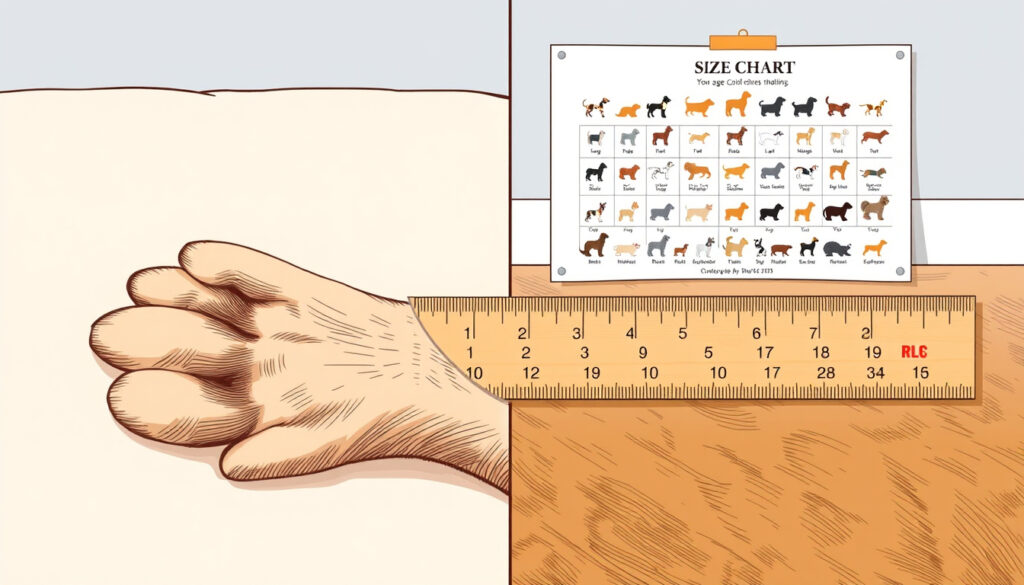
Dog Years Human – Accurate Age Converter & Size Chart
For years, dog owners relied on the simple rule of thumb that one dog year equals seven human years. But modern science has revealed a far more complex and accurate picture of how our canine companions age. Understanding the true conversion from dog years to human years matters for tailoring nutrition, exercise, and veterinary care to your pet’s real life stage. This guide explains the scientifically validated formula, provides size-specific charts, and shows how to use a dog age calculator to get a precise answer.
How to Calculate Dog Years to Human Years
Old 7:1 Rule
Common but inaccurate: 1 dog year = 7 human years. Often overestimates early aging.
Modern Scientific Method
Based on DNA methylation: first year ≈ 15 human years, second ≈ 9, then ~4-6 per year depending on size.
Size Matters
Small breeds live longer; large breeds age faster. Conversion differs especially after 5 years.
Life Stages in Human Terms
Puppy (<1yr = child), Young adult (1-2yr = teen/young adult), Adult (2-7yr = 25-50), Senior (7+ = 50+).
- The 7:1 rule is a myth; it doesn’t account for rapid early maturation or size differences.
- A 1-year-old dog is roughly equivalent to a 15-year-old human; a 2-year-old dog is about 24 human years.
- Small dogs age slower after maturity; a 10-year-old small dog is about 56 human years, while a large dog of same age is 66.
- Using a dog age calculator that factors in weight is more accurate than generic charts.
- The scientific formula based on DNA methylation confirms that dogs age fastest in their first two years, then aging slows significantly.
| Dog Age | Small (0-20 lbs) | Medium (21-50 lbs) | Large (50+ lbs) |
|---|---|---|---|
| 1 year | 15 | 15 | 15 |
| 2 years | 24 | 24 | 24 |
| 5 years | 40 | 42 | 45 |
| 10 years | 56 | 60 | 66 |
| 15 years | 76 | 83 | 93 |
Based on AVMA and veterinary consensus; see full chart for all ages.
How Old Is My Dog in Human Years Based on Size?
The Scientific Methylation Formula
In 2020, researchers published a dog years to human years conversion formula derived from epigenetic methylation rates. The equation is: human age = 16 ln(dog age) + 31, where “ln” is the natural logarithm. This applies to dogs older than one year. A 1-year-old dog equals roughly 31 human years, a 3-year-old equals 49, and a 7-year-old equals 62, according to NBC News.
On an iPhone or Google scientific calculator, type the dog’s age, press the “ln” button, multiply by 16, then add 31. For a 5-year-old dog: 16 ln(5) ≈ 16 × 1.609 = 25.744, plus 31 = about 57 human years.
Size-Based Approximation from Veterinary Groups
Many veterinary organizations, including the AVMA and AKC, use a simpler size-dependent model for dogs over two years. After the first two years (15 + 9 = 24 human years), small breeds add 4 human years per dog year, medium breeds add 5, large breeds add 6, and giant breeds add 7, as detailed by the AKC and La Petite Labs.
Dog Age Calculator: What Age Is My Dog in Human Years?
Using an Interactive Dog Age Calculator
An online dog age calculator asks for your dog’s age and weight to give a human year equivalent. These tools are more accurate than generic charts because they account for the size-specific aging curve. For example, a 5-year-old small dog equals about 40 human years, while a large dog of the same age equals 45, based on the size chart from La Petite Labs.
Common Age Conversions
- 1 human year old dog: 15 human years (all sizes).
- 2 human years old dog: 24 human years (all sizes).
- 5 human years old dog: 40 (small), 42 (medium), 45 (large).
- 10 human years old dog: 56 (small), 60 (medium), 66 (large).
- 15 human years old dog: 76 (small), 83 (medium), 93 (large).
The first year of a dog’s life is the most rapid period of development. A 7-week-old puppy equates to a 9-month human baby, both starting to sprout teeth, according to Science.
Understanding Dog Life Stages Through Human Age Equivalents
Puppy to Adult: The First Two Years
All dogs reach puberty around 10 months regardless of breed. The first two years cover the equivalent of human childhood through young adulthood (0–24 human years). After that, aging slows and becomes more size-dependent.
Senior Status by Breed Size
- Small/Toy breeds: Senior at 7–10 years (some live to 18).
- Medium breeds: Senior around 7 years.
- Large breeds: Senior at 5–6 years (Labradors average 12 years = 70 human years).
- Giant breeds (e.g., Great Danes): Senior at 5 years (live 7–10 years).
Source: AKC and UC Davis Veterinary Medicine.
The 7:1 rule is outdated and inaccurate, as confirmed by the AKC. Dogs age fastest in their first two years, and size/breed are critical factors. Smaller dogs outlive larger ones, and giant dogs hit middle age by 5 years.
Life Timeline: From Puppy to Senior in Human Years
- Puppy (0–1 year) – Human equivalent: 0–15 years (childhood). Key milestones: teething, socialization, basic training.
- Adolescence (1–2 years) – Human equivalent: 15–24 years (teen/young adult). Key milestones: sexual maturity, boundary testing, energy peaks.
- Adult (2–7 years) – Human equivalent: 24–50 years (prime adult). Key milestones: stable health, peak fitness, potential for weight gain.
- Senior (7–10+ years) – Human equivalent: 50–70+ years (older adult). Key milestones: joint issues, slower metabolism, regular vet check-ups.
- Geriatric (10+ years) – Human equivalent: 70+ years. Key milestones: increased health monitoring, possible cognitive decline.
What Experts Agree On – and What’s Still Uncertain
| Established Information | Information That Remains Unclear |
|---|---|
| The first two years of a dog’s life are equivalent to 15 and 9 human years respectively (size-adjusted). | Exact conversion after 2 years varies by individual dog, breed genetics, and lifestyle. |
| Small breeds generally age slower than large breeds after the first few years. | The scientific methylation method provides a range, not an exact match per breed. |
| The 7:1 rule is outdated and not supported by modern research. | Mixed-breed aging may differ from purebred averages. |
Why Dog Age Conversion Matters
Knowing your dog’s true age in human years helps you understand their life stage for tailored nutrition, exercise, and medical care. Accurate age awareness aids in early detection of age-related conditions such as arthritis and dental disease. Veterinarians use human age equivalents to recommend appropriate screening and preventive treatments. The dog age calculator by size and breed is a practical tool for applying this knowledge.
Expert Sources & References
The 7:1 rule is a myth; it doesn’t account for rapid early maturation or size differences.
— AKC, “How to Calculate Dog Years to Human Years”
Dogs age fastest in their first two years, then aging slows significantly.
— AKC
The logarithmic formula accurately matches the average 12-year Labrador lifespan with the 70-year human lifespan.
— Science, “Here’s a better way to convert dog years to human years”
Additional sources: Vets4Pets, Purina, Pedigree, Pettownsend Veterinary Clinic, Wellbeloved.
Beyond the Basics: Updating Your Dog’s Age Knowledge
Understanding the science behind dog years to human years conversion empowers you to make better care decisions for your pet. Check the latest research on DNA methylation aging for more precise breed-specific calculators, use an interactive dog age calculator that asks for weight and breed, and consult your vet to adjust your dog’s diet and activity level based on their human-age equivalent. For a deeper dive, see the dog years to human years conversion formula from the original study.
Frequently Asked Questions
How many human years is 1 dog year?
It depends on the dog’s age and size. The first dog year equals about 15 human years; the second adds about 9 years. After that, each dog year is roughly 4–6 human years depending on breed size.
Is there a dog years to human years chart?
Yes, many veterinary sites provide charts broken down by small, medium, and large breeds. See our Snapshot Facts table above for common conversions.
Why does the size of my dog matter for age conversion?
Large breed dogs age faster and have shorter lifespans, so after the first two years, their human age equivalent increases more quickly than small breeds.
How old is a 5-year-old dog in human years?
Roughly 40–45 human years: 40 for small dogs, 42 for medium, 45 for large. Use a calculator or chart for precise number based on weight.
How many human years is 18 dog years?
Assuming a dog’s first two years cover 15+9=24 human years, 18 dog years would be beyond two years. For a small dog, that’s about 24 + (16×4) = 88 human years, but exact varies.
More related posts
 Emily Ratajkowski – Biography, Age, Husband, Book & Controversy
 Corey Mylchreest – Age, Height, Partner and All Movies & TV Shows
 False Positive Pregnancy Test – Causes, Chances and How to Confirm
 Luton Town F.C. vs Leeds United Standings – Championship Table Analysis
 Billy Fury – Biography, Cause of Death, and Lasting Legacy
 Joe Calzaghe – Undefeated champion’s record, net worth and life now
 Mlp Fluttershy – Complete Character Guide for Fans
 Joanna Scanlan – Biography, Movies, Family and Latest Updates