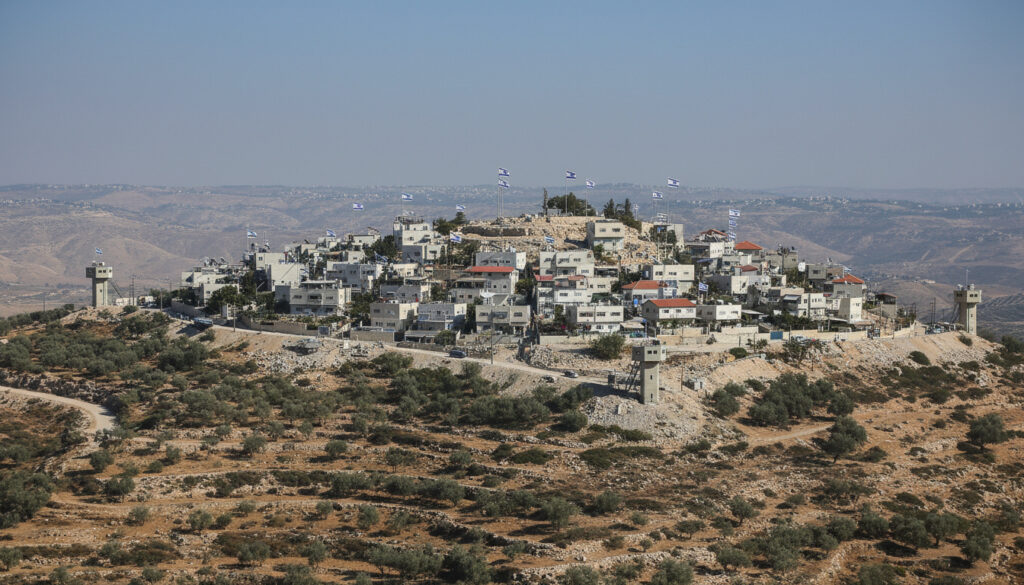
Louis Theroux The Settlers – Summary, Controversy, Where to Watch
Louis Theroux embeds with radical Israeli settlers in the occupied West Bank for his latest BBC documentary, revisiting Palestinian communities fourteen years after his initial reporting first exposed the stark realities of occupation. The film, titled The Settlers, premiered on BBC Two on March 29, 2026, tracing the expansionist ambitions of extremist figures who now wield significant influence within the Israeli government.
Directed by Josh Baker and written by Theroux, the documentary examines the daily operations of the “Godmother” of the settler movement and features Israel’s National Security Minister calling for Palestinian expulsion. Through direct access to these controversial figures, the film documents illegal outpost construction, army-protected harassment of Palestinians, and the ideological drive to resettle Gaza.
Available for streaming on BBC iPlayer in the United Kingdom and through international BBC platforms, the documentary has generated significant debate regarding its portrayal of the Israeli-Palestinian conflict, drawing both praise for exposing settler violence and accusations of anti-Israel bias.
What is Louis Theroux: The Settlers About?
BBC Two & iPlayer
Feature documentary
West Bank extremist settlers
Louis Theroux
- Premiered on BBC Two on Sunday, March 29, 2026, according to The New Arab
- Directed by Josh Baker with Louis Theroux as writer and presenter
- Features embedded access to illegal outposts in the occupied West Bank
- Revisits Hebron fourteen years after Theroux’s 2010 documentary
- Documents Israeli army complicity in protecting settler expansion
- Highlights connections between settler leaders and cabinet ministers
- Available for UK streaming via BBC iPlayer with international platform distribution
| Fact | Details |
|---|---|
| Air Date | March 29, 2026 |
| Broadcast Channel | BBC Two |
| Director | Josh Baker |
| Writer | Louis Theroux |
| Primary Location | Occupied West Bank |
| Key Subject | Daniella Weiss |
| Secondary Subject | Itamar Ben-Gvir |
| Streaming Availability | BBC iPlayer (UK) and BBC international platforms |
Who Are the Settlers Featured in the Documentary?
Daniella Weiss
Daniella Weiss appears as the central figure of the documentary, identified by Theroux as the “Godmother” of the settler movement. In an analysis published on Substack, journalist Jonathan Cook notes that Weiss boasts of establishing nearly every illegal outpost in the West Bank and has actively recruited 800 families for potential Gaza resettlement. She explicitly rejects the possibility of a two-state solution or equal rights for Palestinians, dismissing settler violence while claiming direct influence over Prime Minister Benjamin Netanyahu.
Itamar Ben-Gvir
Israel’s National Security Minister Itamar Ben-Gvir appears speaking at a settler gathering, where he calls for the establishment of Gaza outposts and the expulsion of Palestinians. His presence in the film underscores the documentary’s thesis that extremist ideologies have migrated from the fringes into the highest levels of Israeli government.
Palestinian Communities in Hebron
Theroux revisits Palestinian neighborhoods in Hebron fourteen years after his 2010 documentary, documenting what he describes as deteriorated conditions characterized by apartheid-like restrictions. The film depicts land theft, shop closures, and violence perpetrated by settlers under the protection of the Israeli army, which Theroux portrays as enforcing occupation under the guise of security.
Israeli Anti-Settler Protesters
The documentary also features Israeli citizens protesting against settler expansion, specifically opposing Gaza resettlement plans and advocating for ceasefire agreements. These voices provide contrast to the extremist narratives dominating the film’s primary subjects.
Daniella Weiss claims responsibility for establishing nearly every illegal outpost in the West Bank and maintains that she holds influence over Prime Minister Netanyahu, highlighting the direct line between radical settler activism and state power documented in the film.
What Controversy Surrounds Louis Theroux: The Settlers?
Pro-Palestinian Reception
Commentators from pro-Palestinian and anti-occupation perspectives have praised the documentary as an unflinching exposure of Israeli apartheid and settler extremism. Jonathan Cook describes the film as a “mirror” to Western society’s dark side and a rare instance of the BBC critically examining Israeli policies. These sources emphasize the documentary’s portrayal of army complicity in protecting settler violence.
Pro-Israel Criticism
Conversely, pro-Israel critics have attacked the film as “shameful propaganda.” YouTube channels and organizations like HonestReporting argue that the documentary twists truth by portraying settlers as sociopaths and Israel as the aggressor while presenting Palestinians as voiceless victims. Additional video responses contend that the film ignores crucial context regarding settlements in Judea and Samaria, complicating peace process narratives.
Theroux’s Defense
Speaking to The Guardian, Theroux defends his focus on figures like Weiss by noting their significant cabinet influence and their role as bellwethers for rising ethno-nationalism in Western democracies. He points to Ben-Gvir’s connections with figures like Donald Trump at Mar-a-Lago as evidence that the movement transcends Israeli politics. Theroux’s immersive, access-driven approach—characterized by direct interviews and neutral narration that exposes contradictions without overt judgment—has itself become a point of contention, with critics suggesting this methodology inadvertently amplifies anti-Israel bias.
Background on West Bank Settlements in Context
The documentary contextualizes current settlement expansion within a broader historical framework, noting that while settlers cite biblical claims to Palestinian land, these settlements violate international law according to legal scholars and Amnesty International.
Legal scholars cited in the documentary emphasize that Israeli settlements in the occupied West Bank violate international law regarding territorial expansion and occupation, despite settlers’ biblical justifications for the land claims.
Theroux traces the ideological roots of the movement to the British Balfour Declaration of 1917, which enabled the establishment of a Jewish state for geopolitical aims, and connects present-day expansion to post-1948 ethnic cleansing patterns. The film portrays settlers—frequently immigrants from the United States, United Kingdom, and Europe—as drivers of colonial expansion backed by military force. This How Much Is a Billion – Everyday Examples and Facts provides additional context for understanding large-scale investment flows, though specific funding mechanisms for the settlements remain opaque.
The film connects contemporary settlement activity to the 1917 Balfour Declaration and decades of military occupation, framing the expansion as part of a continuum dating to post-1948 ethnic cleansing in the region.
What Is the Production Timeline of the Documentary?
- : Theroux first documents conditions in Hebron for a prior BBC documentary, establishing the baseline for his return visit.
- : The British Balfour Declaration enables the establishment of a Jewish state, later cited in the film as historical context for settlement claims.
- : Theroux and director Josh Baker film in the West Bank, embedding with settlers including Daniella Weiss and recording Itamar Ben-Gvir at public events.
- : The documentary premieres on BBC Two, immediately generating polarized reactions.
- : The film becomes available for streaming on BBC iPlayer and international BBC platforms.
- : One featured settler publishes claims of misrepresentation via Mondoweiss, while pro-Israel critics release video responses on YouTube.
Does the Documentary Present a Balanced View?
| Established Information | Information That Remains Unclear |
|---|---|
| Theroux employs immersive, access-driven journalism with direct interviews | Whether Theroux’s neutral narration inadvertently amplifies anti-Israel bias remains debated among critics |
| The film includes diverse perspectives including anti-settler Israeli protesters | The extent of editing influence on the portrayal of specific subjects, with one settler claiming misrepresentation of their story |
| Air date (March 29, 2026) and primary subjects (Weiss, Ben-Gvir) are confirmed | Specific international release dates beyond UK availability |
| The documentary depicts Israeli army protection of settler activities | Theroux’s personal political views regarding the conflict |
What Is the Historical Significance of the Settlements?
The settlements depicted in the documentary represent decades of occupation and territorial expansion that legal scholars classify as violations of international law. Theroux frames the settler movement as part of a historical continuum beginning with the post-1948 ethnic cleansing and enabled by the 1917 Balfour Declaration, which established British support for a Jewish state on geopolitical grounds.
The film contrasts the biblical justifications cited by settlers—frequently immigrants from Western nations—with the perspectives of Israelis who reject expansionist policies. This Annuity Calculator UK Gov – Official Tools and Alternatives offers resources for understanding government statistical frameworks, though the documentary emphasizes that settlement expansion occurs outside recognized legal and international norms.
What Are the Key Critical Perspectives on the Film?
The documentary functions as a mirror to the dark side of Western society, exposing Israeli apartheid and settler extremism rarely criticized by the BBC.
— Jonathan Cook, analysis via Substack
Shameful propaganda that twists truth, portraying settlers as sociopaths while ignoring the context of Judea and Samaria.
— Pro-Israel critics on YouTube
This is the part of my story they didn’t tell.
What Should Viewers Know About This Documentary?
Louis Theroux’s examination of West Bank extremist settlers presents a portrait of a movement that has transitioned from marginal militancy to mainstream political influence, featuring direct access to figures like Daniella Weiss and Itamar Ben-Gvir while documenting the deteriorating conditions for Palestinian communities in Hebron. The documentary remains available for streaming on BBC platforms despite significant controversy regarding its alleged bias, offering viewers rare access to the ideological drivers of settlement expansion. Those seeking to understand large-scale quantitative contexts may also consult this How Much Is a Billion – Everyday Examples and Facts for additional numerical perspective.
Frequently Asked Questions
How does Louis Theroux approach objectivity in the documentary?
Theroux employs immersive, access-driven journalism with neutral narration that exposes contradictions without overt judgment. However, critics debate whether this technique inadvertently amplifies anti-Israel bias by platforming extremist voices without sufficient counterbalance.
Why did a featured settler claim misrepresentation?
According to Mondoweiss, one settler featured in the film published claims that the documentary omitted crucial parts of their story, suggesting selective editing influenced the portrayal of specific individuals.
What legal status do the West Bank settlements hold?
Legal scholars cited in the documentary state that the settlements violate international law regarding occupation and territorial expansion, despite settlers citing biblical claims to the land.
How have conditions in Hebron changed since Theroux’s 2010 visit?
The documentary documents worsened conditions characterized by increased apartheid-like restrictions, land theft, shop closures, and army-protected settler violence against Palestinian residents.
What connections does the film reveal between settlers and the Israeli government?
The film highlights Daniella Weiss’s claimed influence over Prime Minister Netanyahu and features National Security Minister Itamar Ben-Gvir speaking at settler events, illustrating the integration of extremist ideologies into state power.
Where can viewers outside the UK watch the documentary?
While confirmed available on BBC iPlayer in the UK, international viewers should check local BBC platforms or international broadcasters for availability in their regions, as specific international streaming dates remain unclear.
More related posts
 Demi Lovato – Biography, Songs, Tour and Personal Life 2025
 Marlene Dietrich – Iconic actress, singer and WWII symbol
 Mark Selby – Net Worth, Wife and World Championship Wins
 Jimmy Carter – 39th President Dies at 100, Legacy Lives On
 Billy Idol – Biography, Net Worth, and 2026 Tour
 Can Anyone Do a Bro Split – Suitability Pros Cons Alternatives
 Anna Lapwood – Biography, Tour Dates and Relationship Status